Understanding the Zero Trust Model
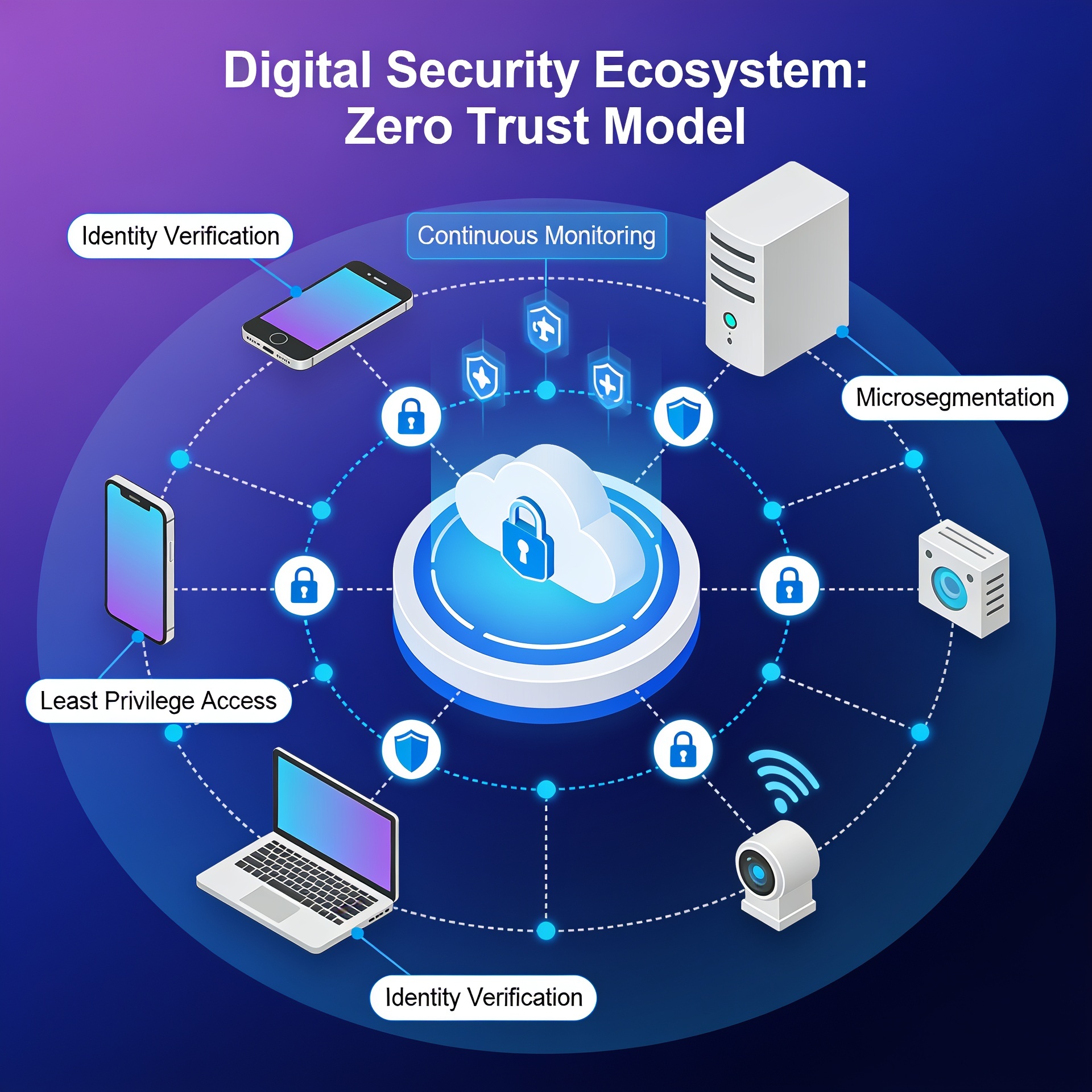
The Zero Trust Model redefines traditional cybersecurity frameworks by challenging the notion of trust. Instead of assuming internal network safety, this model verifies every user and device, enhancing protection against breaches. With rising cyber threats in Australia, implementing Zero Trust is crucial for small and medium-sized businesses (SMBs).
Netlogyxit’s vast experience in cloud security solutions can guide businesses through this transformative process.

Steps to Implement Zero Trust
Implementation begins with restructuring access controls. Here’s how:
- Identify sensitive assets: Focus on data that requires strict protection.
- Map network traffic: Understand data flow to assess vulnerabilities.
- Enforce multi-factor authentication: Enhance verification with layered security.
- Continuous monitoring: Combat threats by observing anomalous activities.
Consider regular cyber risk assessments to align with evolving security demands.
Benefits of Zero Trust for Australian SMBs
Zero Trust offers bespoke security benefits for SMBs:
- Heightened security: Minimize risks with robust, multilayer defense strategies.
- Flexible integration: Seamlessly fits within existing IT structures.
- Enhanced compliance: Simplify regulatory adherence and avoid penalties.
Frequent updates, such as those discussed in our guide on endpoint security, can bolster security postures.
Challenges in Implementation
Despite its merits, Zero Trust adoption has challenges:
- Resource allocation: Need for specialized personnel and tools.
- User education: Employees need thorough training on new protocols.
- Cost implications: Initial setup can be financially demanding.
Our security audits can pinpoint and address these hurdles effectively.
Effective IT Partnership
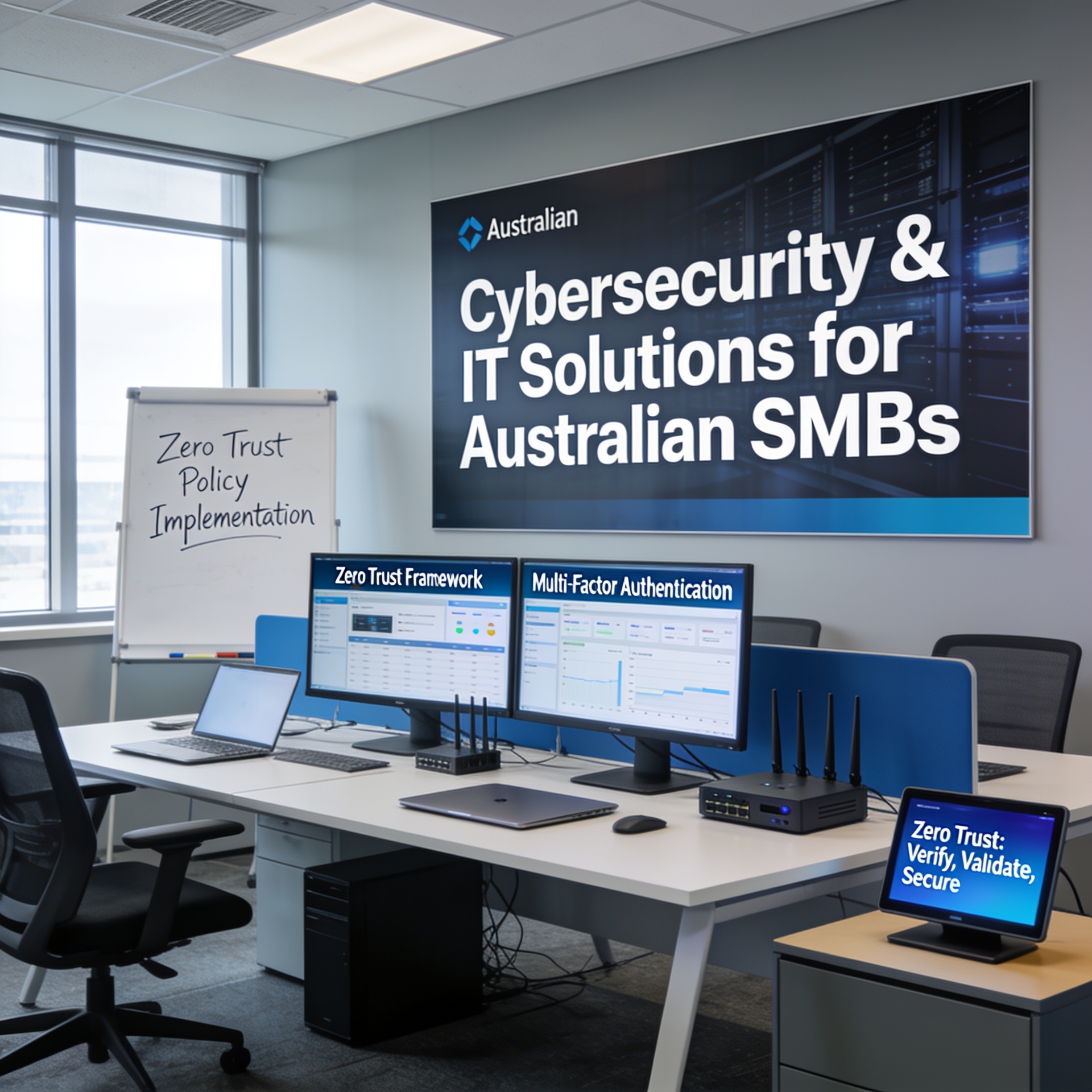
Partnering with a proficient IT company such as Netlogyxit can streamline your Zero Trust implementation, ensuring seamless integration and management of security solutions tailored to your business needs.
Frequently Asked Questions
What is the Zero Trust Model?
The Zero Trust Model is a cybersecurity framework that eliminates assumed trust within a network, requiring verification of every user and device.
Why should Australian SMBs adopt Zero Trust?
SMBs benefit from heightened security, compliance ease, and reduced breach risks by implementing the Zero Trust model.
What challenges might be faced during Zero Trust implementation?
Challenges include resource allocation for specialized personnel, comprehensive user training, and potential initial costs.
How does Netlogyxit aid in Zero Trust implementation?
Netlogyxit provides expert guidance and tailored IT solutions for seamless Zero Trust implementation in Australian SMBs.
Sources & References
- Australian Cyber Security Centre (ACSC)
- National Institute of Standards and Technology (NIST)
- Microsoft Security
- Australian Competition and Consumer Commission (ACCC)
- Department of Industry, Science and Resources