
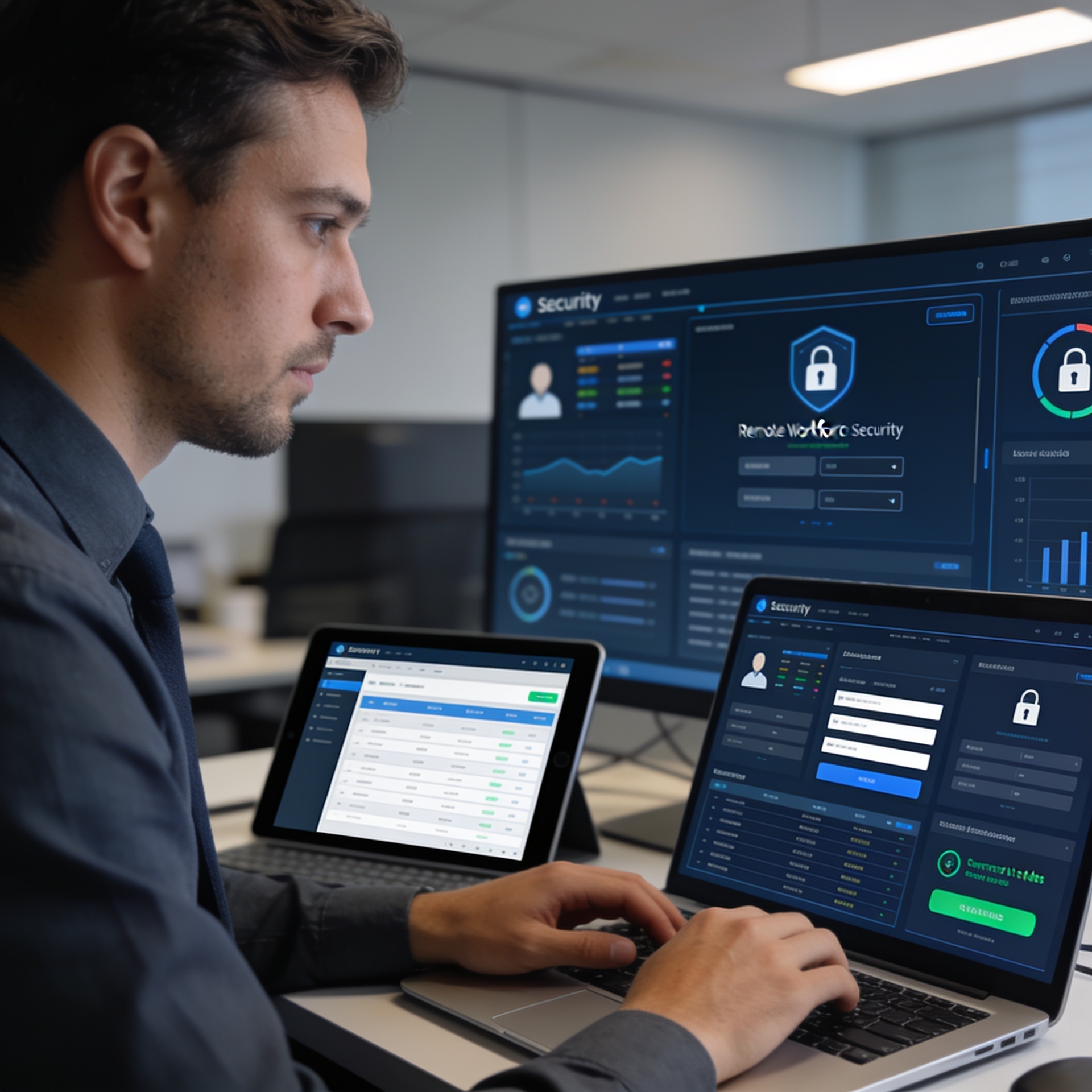
Understanding the Need to Secure Remote Workforces
In the post-pandemic era, remote work is the new normal, bringing with it challenges for Gold Coast SMBs aiming to maintain robust security. Here, we delve into effective strategies to secure your remote workforce, enhancing the safety and productivity of your business.
Securing a remote workforce is crucial with increasing cyber threats. By implementing adequate security measures, SMBs can protect their assets and ensure business continuity.

Implement Strong Authentication Practices
One effective way to secure your workforce is by adopting multi-factor authentication (MFA). By requiring users to verify their identity through multiple methods, you minimize the risk of unauthorized access. To delve deeper into this, explore our guide on MFA fatigue attacks prevention.
Utilize a Reliable VPN
Virtual Private Networks (VPNs) are essential for protecting data transmission over the Internet. They encrypt data and help maintain confidentiality, which is crucial for businesses with remote employees accessing corporate resources from various locations.
Enforce Endpoint Security Measures
Every device connected to your network represents a potential entry point for cyber criminals. It’s vital to equip these endpoints with strong security software and regular updates to mitigate vulnerabilities.
Comprehensive Firewall Setup
Managing firewalls effectively can safeguard your business against various threats. Refer to our detailed insights on why your firewall management is key: firewall management tips for SMBs.
Adopt a Zero Trust Model
Zero Trust Security assumes that threats may exist both inside and outside the network. This model requires strict identity verification for every user and device, minimizing risk exposure.
Cultivate Cybersecurity Awareness
Human error remains a significant security threat. Investing in cybersecurity awareness training can drastically reduce risks associated with phishing and other social engineering attacks. Learn more about our phishing attack prevention methods.
Regular Security Audits and Updates
Security needs are ever-changing. Schedule regular security audits to keep abreast of new vulnerabilities and apply necessary updates. This proactive approach strengthens your overall security posture.
Continuous Monitoring and Response
- Implement a 24/7 monitoring system to detect unusual activities promptly.
- Develop an incident response plan to manage and mitigate breaches effectively.
If you’re keen to learn about how professional IT services can further strengthen your security, explore our article on importance of cybersecurity for Gold Coast businesses.
Frequently Asked Questions
Why is securing a remote workforce important for SMBs?
Securing a remote workforce is crucial to protect sensitive data, ensure business continuity, and prevent unauthorized access.
What is a Zero Trust security model?
Zero Trust security requires strict identity verification for every user and device, minimizing risk inside and outside the network.
How can VPNs help secure remote workforces?
VPNs encrypt data transmissions, maintaining confidentiality and protecting company data when accessed remotely.
What role does cybersecurity awareness play?
Cybersecurity awareness training reduces risks of phishing and social engineering attacks by educating employees.
What are the benefits of security audits?
Regular security audits help in identifying vulnerabilities and implementing updates to strengthen the security posture.
Sources & References
- Australian Cyber Security Centre
- National Institute of Standards and Technology
- Australian Competition and Consumer Commission
